A seemingly never ending supply of wood you find piled high on industrial estates and building sites or quite often they find their way into skips and on to waste land.
But with over 2 billion pallets used every day in transportation worldwide then it’s hardly surprising they are so commonplace in our environment.
However this abundant resource has to be used with due care and attention so before you embark on taking away a pallet or two for your next project there is a really important safety check you need to make.
The Pallet Treatment Codes
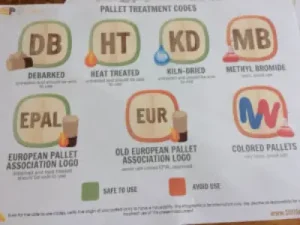 Most pallets are stamped with codes to define the way they have been treated. You should check the pallets for the codes as this gives you important information as to whether you can safely use a pallet or not.
- The IPPC stamp – International Plant Protection Convention – should be present on pallets, this states the wood is free from plant diseases and invasive insect species from other countries.
- [HT] – Stands for heat treated, carried out to control pests and is not harmful to your health
- [DB]– These letter indicate the pallet has been de-barked according to IPPC regulations and so is safe to use
- [EPAL] – Safe to use as these pallets have been heat treated and debarked
- [KD] – Kiln dried to reduce moisture and control fungal growth, this treatment is not harmful to human health
- [EUR] – Old European Pallet Association logo, this has been deemed unsafe to use unless it also carries the [EPAL] stamp
- [MB]-Methyl bromide is pesticide that is highly toxic and is linked to ozone layer depletion. Use of the substance has been banned from Canada, US and EU countries but it is still in use in other parts of the world. Do not take or use pallets with [MB] code they are a hazardous product, a danger to human health and should not be used in joinery/craft/food projects. Do not use them for fuel or burn them; they should only be removed by a certified waste carrier
- Coloured Pallets – There are discrepancies with coloured pallets and how they are treated according to the country they come from so to stay safe it is advised not to use them.
What if I can’t find a code or identify the one on the pallet?
If you can’t find a code or can’t identify the code on the pallet then there isn’t any clear information about the product. If you can’t establish whether it’s safe or not then just don’t use it. There are always plenty more pallets around that will be stamped and identifiable.